Category: Top Stories
-

Deputy Finance Minister hints at review of implementation strategy for e-Levy
A Deputy Minister of Finance, Abena Osei-Asare, has hinted that the government may be reviewing the implementation strategy of the proposed Electronic Transaction Levy (E-Levy) in the coming days. Speaking at a Deloitte Economic Dialogue Webinar on the 2022 budget-themed ‘Digitalisation as a catalyst for economic recovery and growth’, Abena Osei-Asare stressed that government is…
-
GUTA cautions of ‘intense protests’ if benchmark value policy is reversed
The Ghana Union of Traders Associations (GUTA) is warning of intense protests if the government goes ahead with plans to reverse the benchmark value reduction policy. Over a week after the Finance Minister proposed the reversal of the benchmark reduction policy in the 2022 budget, different stakeholders have defended or spoken against the move. In…
-
Ghana can create better jobs through accelerated economic transformation – World Bank
Ghana has an opportunity in the coming decades, to accelerate economic transformation and create more and better jobs, after navigating through the heights of the pandemic. It can achieve this through fostering greater global integration, technological transformation, macroeconomic stability, and financial sector development, says the World Bank’s latest economic analysis for the country. The newly…
-
Rate of e-levy should be reduced to 0.5% – Dr. John Kwakye
While many Ghanaians are still calling for a complete reversal of the proposed 1.75% tax on electronic transactions, as announced in the 2022 budget, others are calling for a reduction or readjustment in the rate to lessen the burden on Ghanaians. For the Director of Research at the Institute of Economic Affairs, Dr. John Kwakye,…
-

E-levy is critical for improving Ghana’s tax-to-GDP ratio – Ofori-Atta
The Finance Minister, Ken Ofori-Atta has defended the Electronic Transaction Levy proposed in the 2022 budget, saying it will help lift Ghana’s tax-to-GDP ratio to a level comparable to peer economies in the sub-region. At around 12% in 2019 and 2020, and 13% in 2021, Ghana’s tax-to-GDP ratio remains far below the government’s target of…
-

OMCs sacrificing a lot to keep fuel price below GH¢7 – Oil Marketing Assoc.
Kwaku Agyemang-Duah, CEO of the Association of Oil Marketing Companies, says oil marketing companies are making a lot of sacrifices to keep the price of fuel in Ghana below GH¢7 per litre. According to him, with dealers barely compromising on their margins and the government maintaining all its taxes on petroleum products, the marketers are…
-
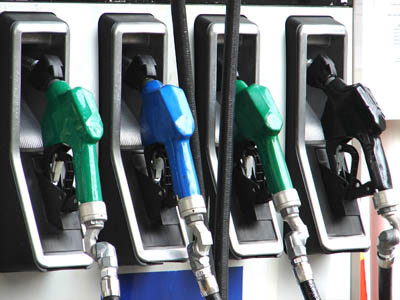
Fuel shouldn’t cost more than GH¢6 per litre in Ghana – IES
The Institute for Energy Security (IES) believes fuel in Ghana should not sell for more than GH¢6 per litre if the government effectively manages the sector. According to its Executive Director, Nana Amoasi VII, many of the variables that influence the price of fuel in Ghana are within the control of the government either directly…
-
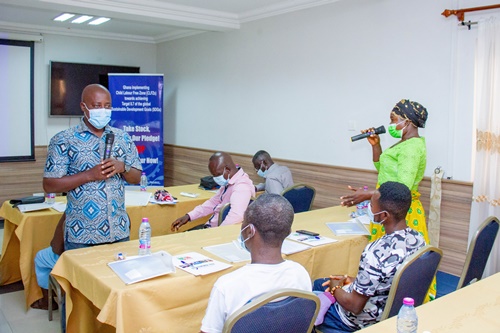
MELR holds workshop to train Community Child Protection Committees on child labour
The Ministry of Employment and Labour Relations (MELR) has held a three-day workshop to train Community Child Protection Committees (CCPCs) on child labour in the Ashanti Region. The workshop is under the Trade for Decent Work Project (T4DWP) championed by the International Labour Organisation (ILO) and the European Union (EU). Child labour and its worst…
-

BoG must give special forex concessions to fuel importers to mitigate price hikes – COPEC
The Chamber of Petroleum Consumers (COPEC) is proposing that the Bank of Ghana (BoG) should give concessionary dollar rates to fuel importers in Ghana. COPEC believes this will go a long way to mitigate the constant hike in the price of fuel in the country. Executive Secretary of COPEC, Duncan Amoah stated that “we have…
-

Ghana lost about GH¢200 million in sales in 2020 due to COVID-19 – Study
Ghana recorded about GH¢200 million dip in sales, representing 61 percent from May to September 2020 as a result of COVID-19, a joint study conducted by the UNDP, World Bank and Ghana Statistical Service and a business tracker study has revealed. Professor Kwesi Amponsah-Tawiah, from the University of Ghana Business School, made this known, during the…